 Tidy Work Home

You bought the bins. You put up a shelf. Maybe you added an over-the-door organizer. For a week, the apartment looked great. Then the chair by the bed filled up with clothes again, and the counter disappeared under mail and chargers.
If that sounds familiar, the problem usually isn't that your home is too small. It's that the storage went in before the decisions were made. This guide covers why small spaces get messy again, the order that works, two rules from Japanese home organizers that most American storage guides skip, and the renter mistakes that can quietly cost you part of your deposit.
01Why small spaces get messy again
- Storage bought before deciding what to keep. Bins bought first tend to fill with things you were never going to use. One storage company's guide calls this "clutter with a lid on it." [1]
- Things without a home. When an item has no fixed spot, every time you put it away you have to decide where it goes. In a small space, the easiest answer is the nearest flat surface.
- Storage packed to 100%. When a drawer or shelf is completely full, putting one thing back means moving three others. So it doesn't get put back.
02The order that works
- Decide first, one category at a time. Pick a single category, such as shoes or bathroom products, and sort it into keep, move elsewhere, and donate. Don't buy anything yet.
- Give every item a fixed home. A University of Florida extension guide says there should be a place to store every item you own. [2] Once each item has one set place, putting things away stops being a decision.
- Put daily items in the "golden zone." See the next section.
- Only then measure and buy. Now you know exactly what you need to store, and where.
03Rule 1: use the "golden zone" for daily items
Japanese home organizers talk about a "golden zone": the space between your eye level and your waist when you stand up straight. You can reach it without bending or stretching, so it is where the things you use every day should live. [3] U.S. workplace safety advice points the same way: a University of Oregon shelving guide says to keep frequently used items between knee and shoulder height. [5]
| Height | What goes there |
|---|---|
| Above eye level | Seasonal and rarely used items |
| Eye level to waist (golden zone) | Things you use every day |
| Below the waist | Things you use less often, and heavy items |
The golden zone is personal: it depends on your height. Most small-space mistakes come from putting daily items up high "to save space" and then leaving them out because they are annoying to put back.

04Rule 2: only fill storage about 70%
One idea from Japanese home organizing is to fill storage to about 70% and leave the rest empty. The thinking is that you should be able to take something out with one hand and see what you have at a glance. [4] It is a rule of thumb, not a measured standard. We like it because the empty space is what makes putting things back easy enough that you actually do it.
05Use the space under the bed (measure first)
The area under a bed suits seasonal clothes, spare bedding and shoes. Measure from the floor to the lowest part of the bed frame, then choose containers lower than that. One storage guide suggests this rule of thumb: [1]
- Under 6 inches: low-profile containers only
- About 6 to 9 inches: standard rolling under-bed bins
- 10 inches or more: regular storage totes

06Renter traps that can cost your deposit
- Adhesive hooks on the wrong surface. On wallpaper or textured walls, adhesive strips can pull the surface off when they come down. [1] Use them only where the manufacturer says they work, and test in a hidden spot first.
- Heavy shelving mounted without permission. Anchors and screws leave holes that may show up on your move-out inspection. Check your lease first.
- No record of the walls. Take photos of every wall on the day you move in, so you can show what was already there. [1]
Options that usually need no drilling: freestanding shelves, tension rods, over-the-door organizers (check that the door still closes) and under-bed containers.
07Storage ideas by room
The order above is the same in every room. Each of these guides takes one room and goes into more detail.
- Kitchen. How to organize a small kitchen: decide what stays on the counter, keep the stovetop clear, and keep cleaners away from food. For the shelves and the cabinet below, see small pantry organization ideas and under-sink storage for a small kitchen.
- Bathroom. Wet room storage ideas for small bathrooms: what can live in the spray, what must stay dry, and where shelves and hooks go. For the shower itself, see small shower storage ideas.
- Bedroom. Small bedroom storage ideas: take things out first, use the space under the bed, and anchor tall furniture.
- Closet. Small closet organization: three zones, hang by length, and fold clothes upright.
- Living room. Small living room storage ideas: give mail, remotes and blankets one home, keep heavy things low, and keep space clear around heat.
- Home office. Small home office ideas: where the desk goes, a layout that keeps your legroom clear, and an ergonomic setup.
- Entryway. Small entryway ideas: keep only daily things by the door, use two mats, and give shoes one spot.
- Laundry. Small laundry room ideas: keep only laundry things by the machines, clear the dryer area, and store laundry packets up high.
Or browse every guide for one room: kitchen, bathroom, bedroom and closet, living room, home office, entryway and laundry and seasonal and holidays.
08Quick fixes for common problems
| The problem | Likely cause | Try this |
|---|---|---|
| Clothes pile up on a chair | No easy place to put them back | Add hooks or a spot in the golden zone for clothes you will wear again |
| Bins are full but you can't find anything | Storage bought before sorting; bins too deep | Sort one category first; use shallower, labeled bins |
| The counter is always covered | Daily items have no fixed home | Choose one tray or drawer as the home for them |
| Things fall out when you open a drawer | Storage packed to 100% | Remove items until it is about 70% full |
09If you only do one thing today
Pick the one surface that gets cluttered first in your home, like the chair, the counter or the entry table. Take everything off it, and give each item a fixed home somewhere else. Don't buy anything until you've done this once.
Free tool: the declutter checklist by room. Pick your rooms and a start date, and print a dated plan that clears one spot at a time.
Keep reading
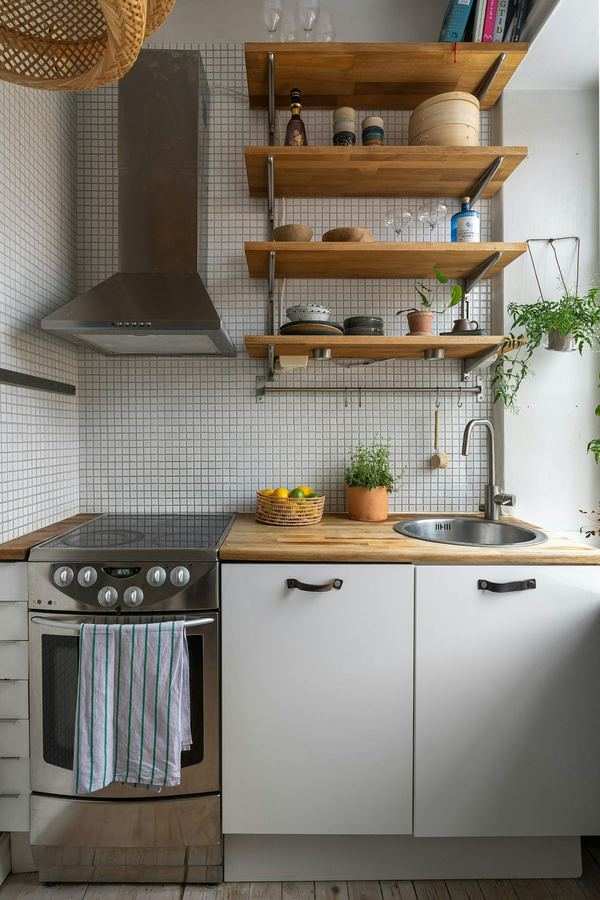 Kitchen
Small Kitchen Organization Ideas That Keep the Counter Clear
Decide what stays out, keep the stovetop clear, and keep cleaners away from food.
 Closet
Small Closet Organization: A Full Closet and Nothing to Wear?
Small closet organization that starts with what you actually wear.
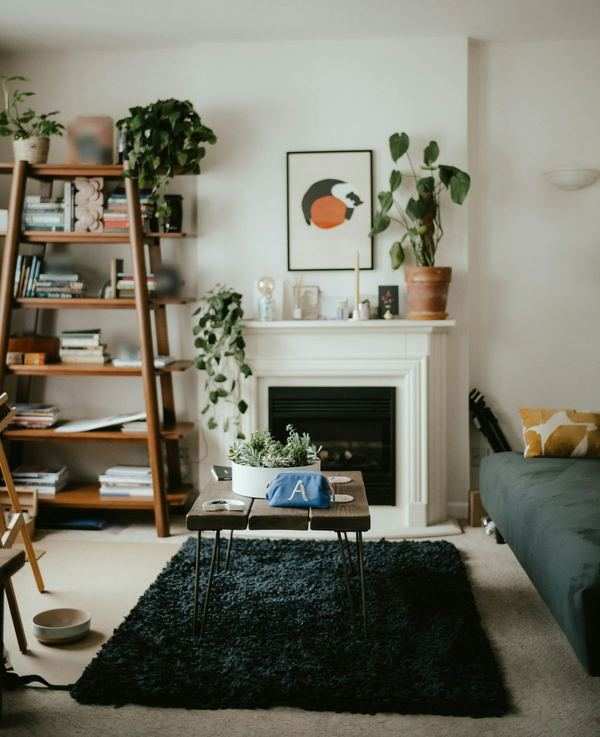 Living room
Small Living Room Storage Ideas: Fewer Piles, Safer Corners
Give mail, remotes and blankets one home, keep heavy things low, and keep 3 feet clear around heat.


Sources
- 10 Federal Storage, "Small Apartment Storage Ideas"
- University of Florida IFAS Extension, "This Spring, Cut Through the Clutter and Make a Fresh Start"
- Taeko Mizutani, on the storage "golden zone" (Japanese)
- Shikumi Kaji, on the 70% storage rule (Japanese)
- University of Oregon, Safety and Risk Services, "Shelving Safety" (PDF)
Last updated: November 16, 2026
Photos: Lisa Anna, Vladimir Mokry and Shoham Avisrur on Unsplash