 Tidy Work Home

You open the cabinet under the sink and something falls out. There's a sponge multipack in front, three spray bottles behind it, and a box of trash bags wedged against the drain pipe. You haven't seen the back wall in months.
That last part is the real problem. It's the one cabinet in your kitchen with a water line running through it, and the cleaners stored there don't all mix safely. If you have small kids, it also sits right at their height. This guide sets up the space around those three facts, in that order.
01Keep the pipes in view
The EPA's advice on mold is simple: fix plumbing leaks as soon as you can, and dry wet areas and items within 24 to 48 hours. If you do, mold won't grow in most cases. [1] A packed cabinet works against that, because you can't see a drip until the cabinet floor is already soaked.
- Our suggestion: leave a clear gap around the drain pipe and the shutoff valves, and store things to the left and right of the pipes, not in front of them.
- Put a washable mat or a shallow tray on the cabinet floor. A wet spot on it is easy to see, and it's quicker to dry than the cabinet base. For example, a cut-to-fit waterproof under-sink mat (Walmart).
- Use bins you can lift out in one move. If you have to empty the cabinet to reach the valve, the space is too full.
02Give bleach its own bin
The Washington State Department of Health warns that bleach mixed with ammonia gives off toxic gases called chloramines, and bleach mixed with an acid gives off chlorine gas. [2] Ammonia is in some glass and window cleaners. Products with acids include vinegar and some glass cleaners, dishwasher detergents and rinses, toilet bowl cleaners, drain cleaners and rust removers. [2] The department also says to read the label before you use any cleaning product. [2]
- Our suggestion: keep bleach products in a bin of their own and the rest of your cleaners in another. A separate bin won't stop a reaction, but it makes it less likely that you'll grab two bottles at once and use them back to back on the same surface.
- Write "BLEACH" on the front of that bin so anyone in the house can tell at a glance.
- Drain cleaners and dishwasher detergents are on that list, and they're exactly the products most of us keep under the kitchen sink. Check their labels before they share a bin with bleach.
03If kids are around, lock it or move it up
The American Academy of Pediatrics (AAP) suggests storing strong cleaners and dishwasher soap in a high cabinet, locked and out of sight. If they have to stay under the sink, it suggests an automatically fastening child safety lock. [3] The AAP also warns against moving dangerous products into containers that look like they might hold food. [3]
- Our suggestion: in a small kitchen, a high cabinet is often full already. Move only the strongest products up (drain cleaner, dishwasher detergent, bleach), and keep the milder ones below with a lock on the door.
- If you rent, check your lease before drilling into a cabinet door. Some locks attach without screws, but read the product instructions to see whether it's meant for your type of cabinet.

04What to keep, and what to move out
Once the pipes are clear and the bleach has its own bin, there isn't much room left. That's fine. This cabinet works best with a short list.
- Keep: the dish soap and sponges you use every day, one open bottle of each cleaner, and a roll of trash bags.
- Move out: backup packs and refills. Our suggestion: put them on a high shelf or in a hall closet, and bring one down when the open bottle runs out.
- Never here: food. If the cabinet ever gets wet, anything stored in it sits in the water. For more on keeping cleaners and food apart, see how to organize a small kitchen.
05Quick fixes for common problems
| The problem | Likely cause | Try this |
|---|---|---|
| Found a leak only after the cabinet floor warped | Bins packed in front of the pipes | Clear a gap around the pipes and add a mat you can see |
| Things fall out when you open the door | Backup packs stored with everyday items | Keep one of each here, refills elsewhere |
| Bleach right next to the glass cleaner | All cleaners in one bin | A separate, labeled bin for bleach |
| Toddler can open the door | No lock at child height | Move the strongest products up and add a lock |
06If you only do one thing today
Take everything out of the cabinet, run a hand along the floor and the back wall, and check for damp spots. Then put back only what you use every week, and keep it to the sides of the pipes.
Keep reading
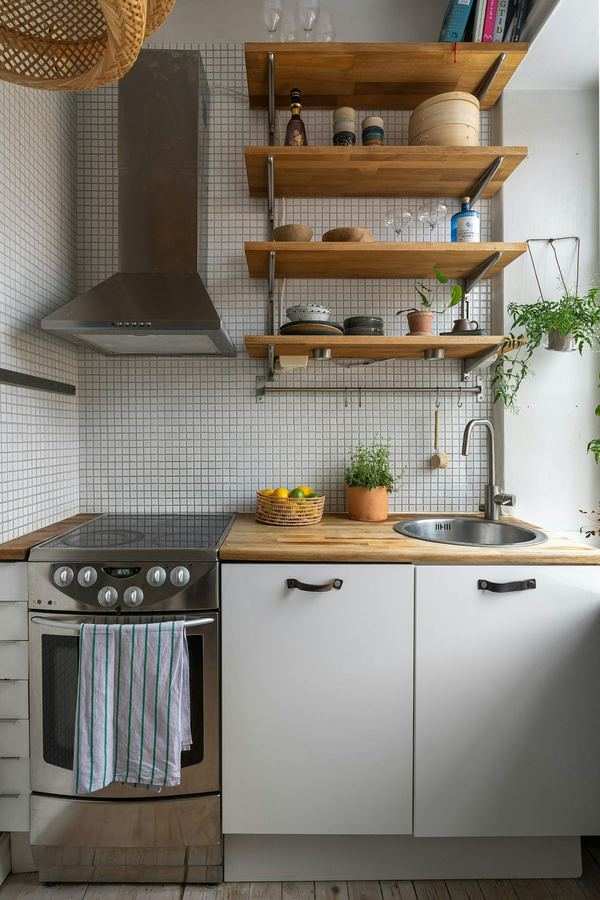 Kitchen
Small Kitchen Organization Ideas That Keep the Counter Clear
Decide what stays out, keep the stovetop clear, and keep cleaners away from food.
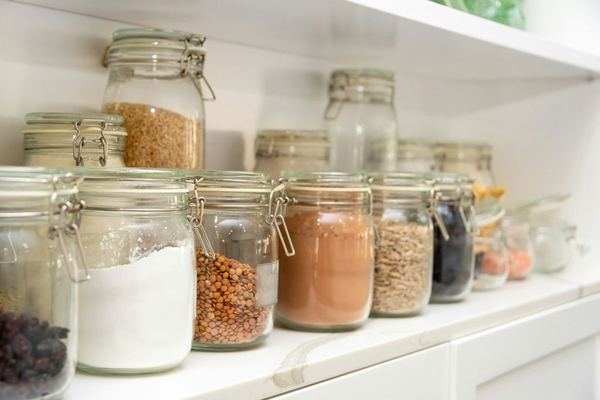 Kitchen
Small Pantry Organization Ideas That Stop Food From Getting Lost
First in, first out, containers that actually seal, and Japan's rolling stock.
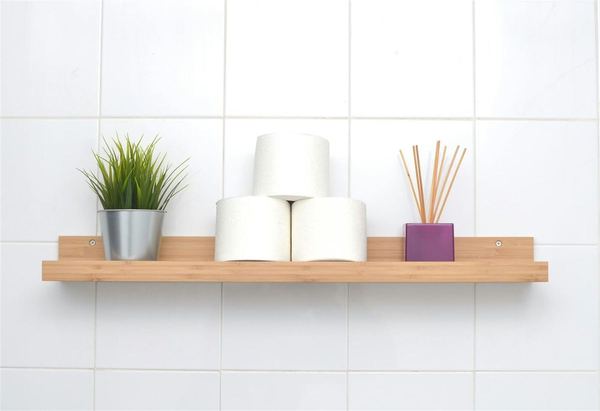 Bathroom
Wet Room Storage Ideas for Small Bathrooms
What can live in the spray, what must stay dry, and where shelves and hooks go.


Sources
- U.S. EPA, "A Brief Guide to Mold, Moisture and Your Home"
- Washington State Department of Health, "Dangers of Mixing Bleach with Cleaners"
- HealthyChildren.org (American Academy of Pediatrics), "Kitchen Safety"
Free tool: the Will It Fit? storage bin size calculator. Enter the clear space beside the pipes and the size of a bin to see if it fits.
Photos: Lisa Anna and Alex Tyson on Unsplash