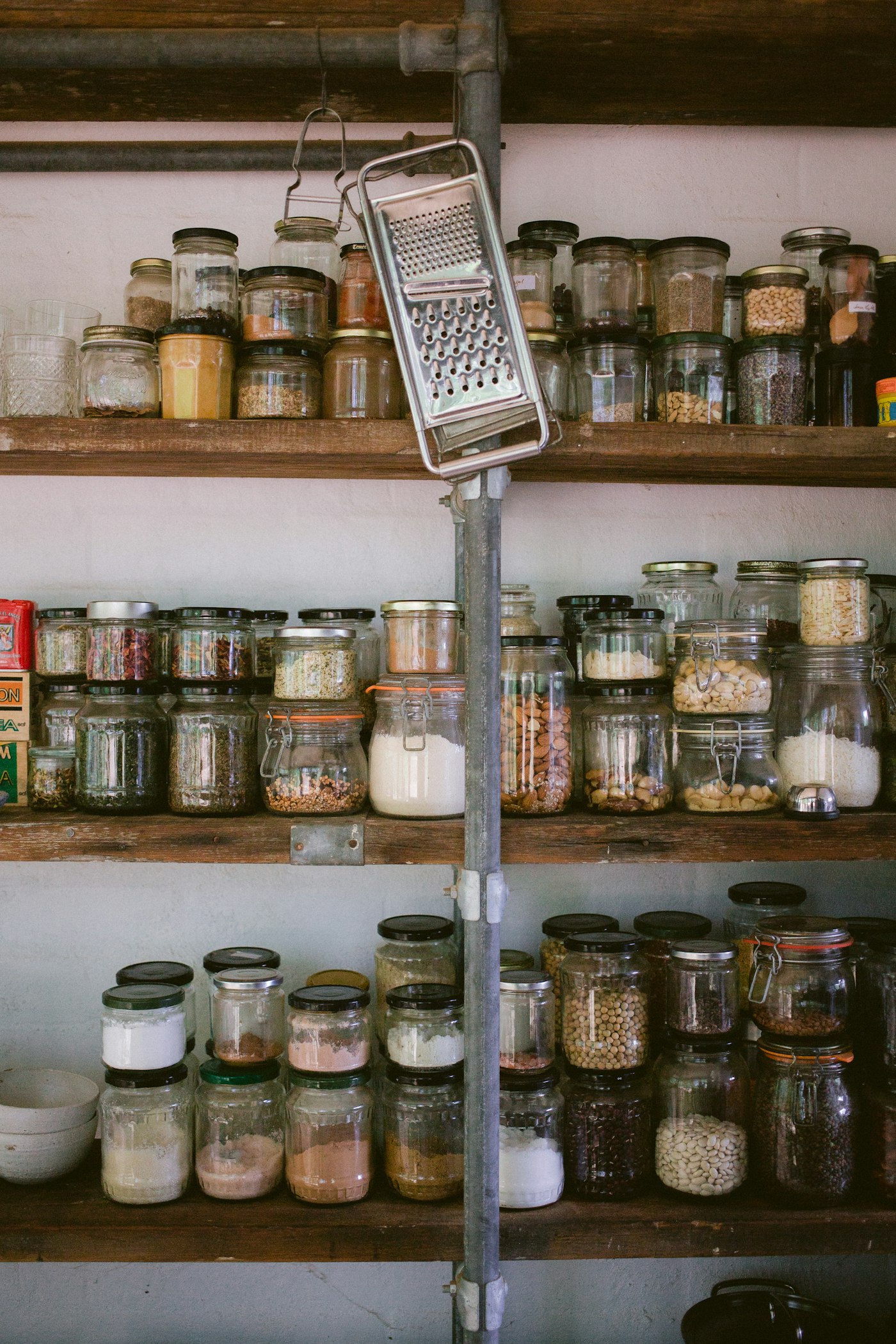
You bought pasta, then found two more boxes behind the cereal. There's a bag of flour you don't remember opening. Once, a small moth flew out when you reached for the oats. The pantry is full, but you still can't find what you need.
Most pantry advice is about matching containers. This guide starts with something less pretty: what happens to the food at the back of the shelf. You'll find the order that keeps food moving, which containers actually keep bugs out, and a Japanese habit that turns a small pantry into a backup food supply.
01Start with the back row, not new bins
A University of Arkansas extension guide on pantry pests says infestations generally develop in seldom-used foods and the least disturbed storage areas. [2] In a small pantry, that's the back row and the top shelf: the places you can't see.
So before you buy anything, take everything out of the back of each shelf. Check dates, look for open bags, and throw out anything with insects in it. [2]
02New goes behind, old comes forward
North Carolina A&T's extension service, citing the USDA, recommends putting newer packages behind older ones and using the "first in, first out" method. [1]
- Unpack groceries by sliding the old items forward first, then putting the new ones behind them.
- Keep one row deep where you can. In a narrow pantry, a second row is where food gets lost.
- Group food by how you use it (breakfast, baking, dinner) so you check one spot instead of every shelf.
03Use containers that actually seal
Clear containers help you see what you have, but the lid matters more than the look. The Arkansas guide recommends screw-top glass containers for opened dried foods, and notes that ordinary metal kitchen canisters are not tight enough to keep insects out. Some plastic containers with very tight-fitting lids may work. Cardboard, paper and plastic wrapping will not prevent infestations. [2]
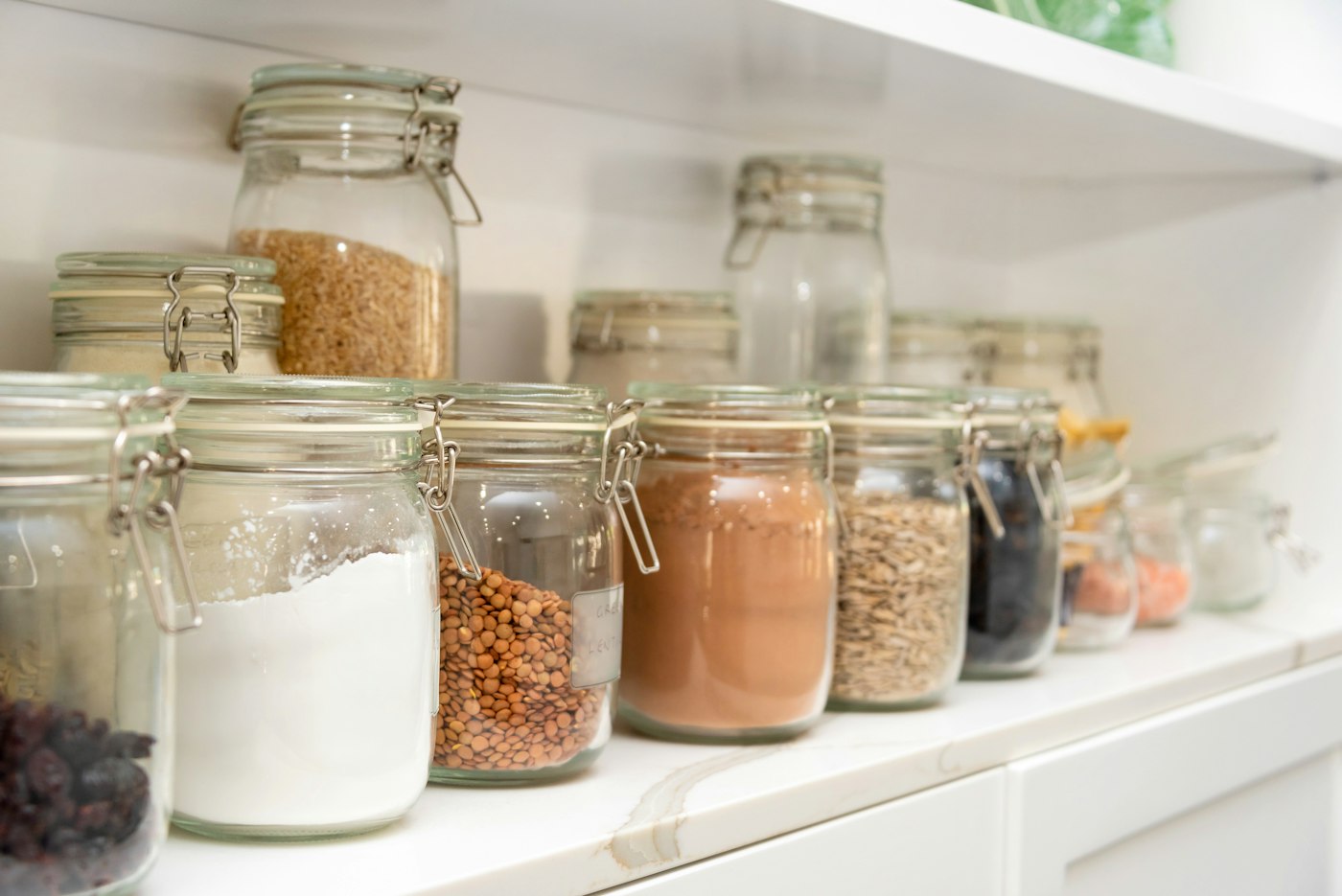
- Start with the foods pests like: flour, cereal, pasta, dried fruit, nuts and spices. [2]
- Label each container with what it is. Writing the date you opened it is our suggestion, not a rule from the guide.
04Buy sizes you can finish, and check them first
A small pantry can't hold a warehouse. The Arkansas guide suggests buying dried food in packages you can use up in a short time, and checking packages in the store for breaks, because food is often already infested when it comes home. [2]
05Keep it cool and dry
Shelf-stable food can be stored in a cool, dry place, away from spots with extreme temperature changes or dampness. [1] In a small kitchen, check what's next to your pantry before you fill it.
Cans don't last forever either. The same source says most canned meats and vegetables keep two to five years, while high-acid foods like tomatoes and fruit should be used within 12 to 18 months. [1]
06The Japanese twist: "rolling stock"
Japan's Ministry of Agriculture promotes a habit called "rolling stock": buy a little more of the food you normally eat, eat the oldest first by its date, and buy back what you used. That way the home always has a set amount of food on hand for emergencies. [3]
It's the same first-in, first-out rule, with one change: you keep a small buffer on purpose. For a small pantry, our suggestion is to give the extras one bin or one shelf. When that space is full, you have enough.
- Choose foods you already eat, so nothing sits until it expires.
- The ministry's poster also suggests mixing in canned fish or meat, vegetable juice and dried fruit, so you're not left with only rice or pasta. [3]
07Quick fixes for common problems
| The problem | Likely cause | Try this |
|---|---|---|
| Buying things you already have | Old items hidden in the back row | New goes behind, old comes forward |
| Small moths or beetles | Open bags, loose lids, forgotten food | Clear out the back; use screw-top glass or very tight lids |
| Expired cans | No one checks dates | Check the back row when you unpack groceries |
| Pantry overflowing | Bulk sizes that take months to finish | Buy what you can use soon; keep extras to one bin |
08If you only do one thing today
Empty the back row of one shelf. Throw out what's expired or buggy, then put the oldest food in front where you'll see it tomorrow.
Sources
- North Carolina A&T State University Cooperative Extension, "Stocking Up" (citing USDA FSIS)
- University of Arkansas Division of Agriculture, "Pantry Pests" (FSA7024, PDF)
- Hokuriku Regional Agricultural Administration Office (Japan's Ministry of Agriculture, Forestry and Fisheries), "Rolling stock" poster, from the ministry's food stock guide (Japanese, PDF)
More ideas: Storage Ideas for Small Spaces That Actually Stay Organized and Small Bathroom Storage Ideas.
Photos: Luisa Brimble and Steven Ungermann on Unsplash