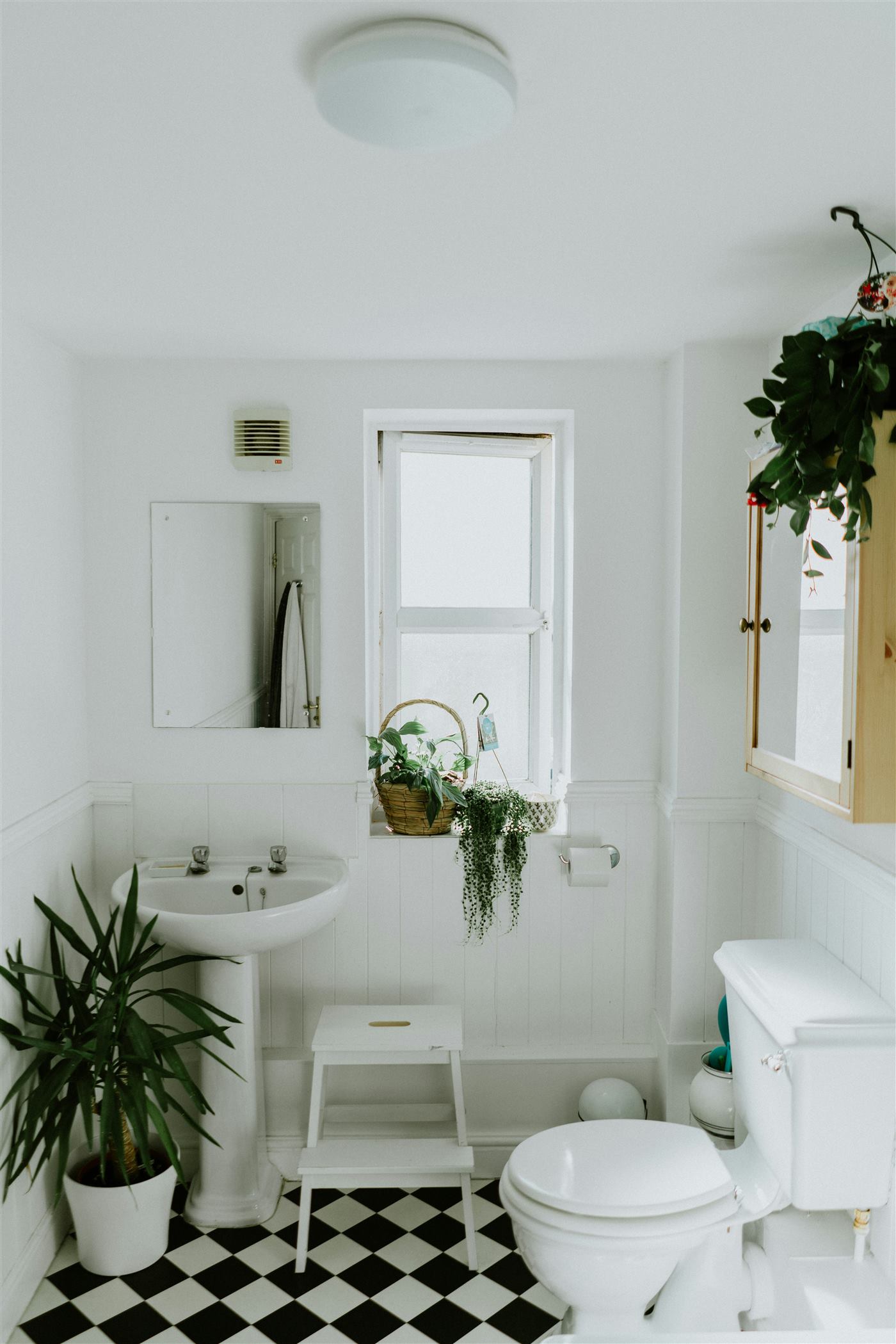
In a small bathroom, toiletries, towels and cleaning supplies tend to end up on the edge of the sink or the top of the toilet tank. This guide covers places to add storage without taking floor space: the wall above the toilet, the back of the door, the space under the sink and the inside of cabinets. Bathrooms are also humid, so it ends with what to check before you buy.
Start by measuring
- The wall above the toilet: width between fixtures, and the height from the tank lid to the ceiling.
- Under the sink: the inside width, depth and height of the cabinet, and where the pipes sit.
- The door: its thickness and the gap above it, if you are considering an over-the-door organizer.
- Clearance: leave room to open doors, drawers and the toilet lid fully.
Use the wall above the toilet
The wall above the toilet is often empty. A shelf or a narrow cabinet there can hold spare toilet paper, towels or items you use every day.
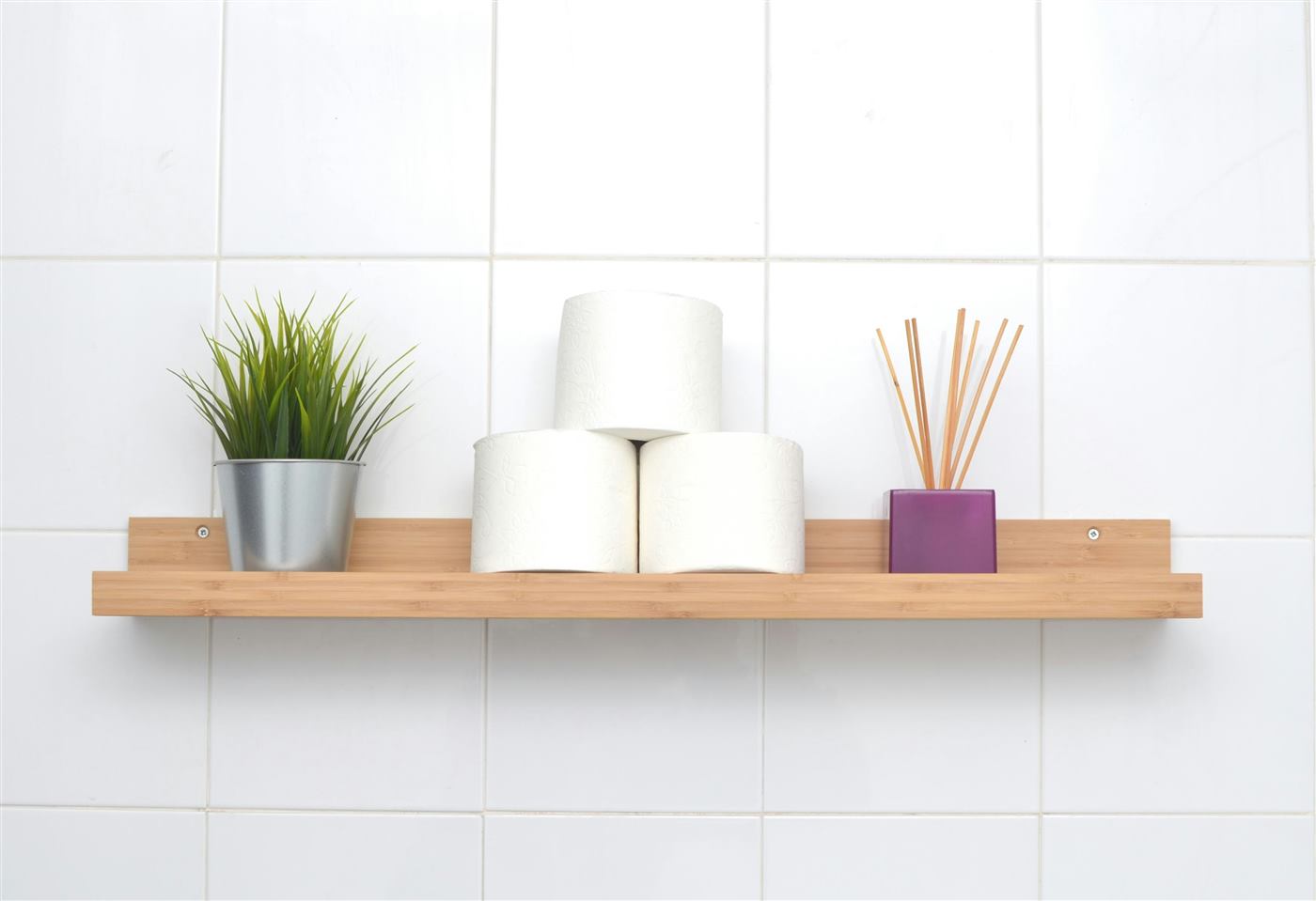
- Keep heavier items low on the shelf, and check how much weight the shelf is rated to hold.
- Leave enough space above the tank to lift the lid if you need to reach inside.
Use the back of the door
- Hooks or a rail on the back of the door can hold towels and robes.
- Over-the-door organizers with pockets can hold small items. Many hang on the top of the door without drilling.
- Check that the door still closes fully once the organizer is in place.
Organize under the sink
- Stackable bins or a small two-tier organizer can make use of the height inside the cabinet. Measure around the pipes first.
- Group items by type, such as cleaning supplies, spare toiletries and hair tools, so each has a place.
- A tension rod across the cabinet can hold spray bottles by their handles.
Keep the counter clear
- A small tray can collect the few items you use every day, so the rest of the counter stays clear.
- Store items you use less often inside a cabinet rather than on the counter.
If you rent
Options that usually do not need drilling include freestanding shelving that fits over the toilet, over-the-door organizers, tension rods and under-sink organizers. Adhesive hooks are another option, but how well they hold on tiles in a humid room depends on the product, so read the manufacturer's instructions and check your lease before changing anything on the walls.
Quick comparison
| Idea | Best for | Things to check |
|---|---|---|
| Shelf above the toilet | Spare paper, towels, daily items | Weight rating, wall type, space to lift the tank lid |
| Over-the-toilet freestanding unit | Renters | Width around the toilet, stability |
| Door hooks or organizer | Towels, robes, small items | Door thickness, gap above the door, door still closing |
| Under-sink bins or organizer | Cleaning supplies, spares | Cabinet size, position of pipes |
| Tension rod under the sink | Spray bottles | Cabinet width, how much weight it holds |
Things to keep in mind
- Bathrooms are humid. Check that a product is described as suitable for bathrooms or damp areas before buying.
- Keep storage away from places where it can get splashed, and make sure it does not block vents or windows.
- Check weight ratings and follow the manufacturer's instructions.
- Compare the size on the product page with your measurements, and check the return policy.
More ideas: Storage Ideas for Small Spaces and Closet Organization Ideas for Small Spaces.
Last updated: October 6, 2026
Photos: Phil Hearing and Nando García on Unsplash